
Message from Division Chair
Physics Education Research (PER) Division provides a forum for the research on pedagogical techniques and strategies that will help students learn physics more effectively and help instructors to implement these techniques. This also includes the best scientific practices like active learning, which will give every student in a class an equal opportunity to learn. For more information on PER, you may also visit this site: https://www.aapt.org/aboutaapt/history/AAPT-History-PER.cfm
We invite you and your colleagues to submit abstracts for oral and poster presentations and eagerly anticipate your participation at the conference.
Important Links
Conference Timeline
Invited Speaker
Doing Physics Means Feeling Confusion
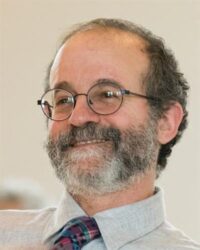
The core work of a scientist is to engage with what they do not know, and that engagement generally begins with noticing that something is off, that there is some gap or inconsistency —in other words it begins with confusion. If we are really to teach physics, then, we need to help students notice and engage with confusion and to engage productively with it. Part of the challenge is that, in science, confusion is an opportunity for the interesting, pleasurable pursuit of understanding; in school, it is mostly a liability to avoid. I’ll talk about teaching and research on learning focused on how students experience and engage with confusion.
Division Schedule
Please look below for detailed schedule.
|
Date/Time: |
Abstract Number: ANPA2026N00096 Presenting Author: David Hammer (Invited) Co-Authors: nan Presenter's Affiliation: Tufts University Title: Doing Physics Means Feeling Confused. Location: Virtual Presentation Show/Hide Abstract The core work of a scientist is to engage with what they do not know, and that engagement generally begins with noticing that something is off, that there is some gap or inconsistency —in other words it begins with confusion. If we are really to teach physics, then, we need to help students notice and engage with confusion and to engage productively with it. Part of the challenge is that, in science, confusion is an opportunity for the interesting, pleasurable pursuit of understanding; in school, it is mostly a liability to avoid. I’ll talk about teaching and research on learning focused on how students experience and engage with confusion.
|
||||||
|
Date/Time: |
Abstract Number: ANPA2026N00097 Presenting Author: Shruti Shrestha Co-Authors: nan Presenter's Affiliation: Penn State Brandywine Title: Key Findings and Insights from Evaluating AI Systems on AP Physics Free Response Questions Location: Virtual Presentation Show/Hide Abstract The rapid advancement of large language models (LLMs) has generated growing interest in their potential role in physics education and assessment. However, their performance on multi-step, free-response physics problems remains underexplored. In this study, we evaluated four widely accessible AI systems, which are ChatGPT 4.1 Mini, Gemini 2.5 Flash, Claude 4.0 Sonnet, and DeepSeek R1, using algebra-based Advanced Placement (AP) Physics 1 and AP Physics 2 free-response questions administered from 2015 to 2025. This talk presents a qualitative analysis of recurring error patterns across the models, as well as a comparison of their problem?solving approaches and solution accuracy. The findings highlight both the instructional potential of AI-assisted learning tools and the current pedagogical and conceptual limitations that educators should consider when integrating these systems into physics teaching and assessment.
|
||||||
|
Date/Time: |
Abstract Number: ANPA2026N00098 Presenting Author: Chandra M. Adhikari Co-Authors: nan Presenter's Affiliation: fsu Title: Concept Maps for Physical Science Courses Learning Location: Virtual Presentation Show/Hide Abstract Taking notes during lectures is one of the required skills, among many others, that students need to master the topic covered in the lecture, actively engage in the learning process with minimal to no distractions, and retain learned knowledge and skills for a longer time. Physics and physical science courses are fact-based, demand understanding of scientific and mathematical concepts, develop critical thinking and problem-solving skills, and prepare students to apply these skills in technological advancement. Concept maps can be a great way to learn and master physics and related sciences. In this presentation, I will discuss my findings on implementing this teaching and student learning strategy.
|
||||||
|
Date/Time: |
Abstract Number: ANPA2026N000100 Presenting Author: Nawa Raj Dahal Co-Authors: nan Presenter's Affiliation: University of Arkansas at Fort Smith Title: Peer Discussion and Physics Learning: An Observation in a University Physics Class Location: Virtual Presentation Show/Hide Abstract Active learning techniques provide students with opportunities to practice, solve problems, and develop a higher-order understanding of subject material through group discussion, critical thinking, reasoning, and decision-making. This presentation examines data-driven patterns in student learning behavior as observed in a lower-level physics class. Observations made in a University Physics I class at the University of Arkansas at Fort Smith support the idea that group discussions—particularly those structured around Think-Pair-Share questions—promote positive learning experiences among students.
However, the observations also reveal that the final answer chosen for a Think-Pair-Share question, whether selected individually or collaboratively, does not always align with correct reasoning. This finding highlights the need for further research to better understand the underlying causes and to identify effective solutions, which are likely to be multifaceted. Some contributing factors may include reasoning based on logic that is irrelevant to or unsupported by physics or mathematical equations, as well as misconceptions and erroneous preconceptions.
|
||||||
|
Date/Time: |
Abstract Number: ANPA2026N000101 Presenting Author: Uma Poudyal Co-Authors: Tikaram Neupane Presenter's Affiliation: University of North Carolina at Pembroke Title: Time Resolved Absorption Spectroscopy for Undergraduate Materials Research Location: Virtual Presentation Show/Hide Abstract This study aims to enable undergraduate research in materials science through the use of the Time Resolved Absorption Spectroscopy (TRAS) Educational Kit to investigate excited state dynamics in functional materials. Transient absorption spectroscopy is a pump–probe technique that measures changes in optical absorption following photoexcitation, providing direct information about excited state lifetimes, relaxation pathways, and charge transfer processes relevant to photonic and optoelectronic materials. Using the TRAS kit, undergraduate researchers will study model organic systems such as zinc tetraphenylporphyrin (ZnTPP) by recording transient absorption decay curves under varying experimental conditions, including changes in concentration and excitation parameters. Students will gain hands on experience in optical alignment, laser safety, time resolved data acquisition, and quantitative analysis of spectroscopic data. Integrating the TRAS Educational Kit into undergraduate research strengthens materials science research infrastructure while providing students with early exposure to advanced experimental techniques and preparation for graduate study and STEM careers.
|
||||||
|
Date/Time: |
Abstract Number: ANPA2026N00099 Presenting Author: Umesh Silwal Co-Authors: Rudra Kafle, Ramesh Dhungana, Binod Nainabasti, and Sweta Tiwari Presenter's Affiliation: University of North Carolina at Charlotte Title: Managing Cognitive Load in Learning with Generative Artificial Intelligence Location: In-Person Presentation, Kennesaw Show/Hide Abstract Generative Artificial Intelligence (GenAI) has the potential to make learning more manageable, especially for novices who are often overwhelmed by complex material. According to Cognitive Load Theory (CLT), learners experience three types of cognitive load: intrinsic, extraneous, and germane. GenAI can ease this burden in several practical ways. It can support learning by providing scaffolding, reducing extraneous load through clearer explanations and well-structured content, and managing intrinsic load by breaking complex material into simpler, more manageable chunks and offering translations into learners’ preferred languages. Additionally, it can enhance germane load by providing personalized feedback and tailored guidance. These benefits are particularly valuable in conceptually demanding disciplines such as physics and other sciences, where concepts are often abstract and inherently challenging. However, there is an important trade-off: excessive reliance on GenAI may reduce the productive struggle necessary for deep understanding. For this reason, GenAI should be used thoughtfully. Its role in education needs to be intentional and well-designed, supporting learning without replacing the effort that leads to mastery. This talk will explore different types of cognitive load present in learning and examine how GenAI can be used effectively to support deeper learning. We will also share preliminary reflections and insights from our classroom experiences.
Authors:
|
||||||